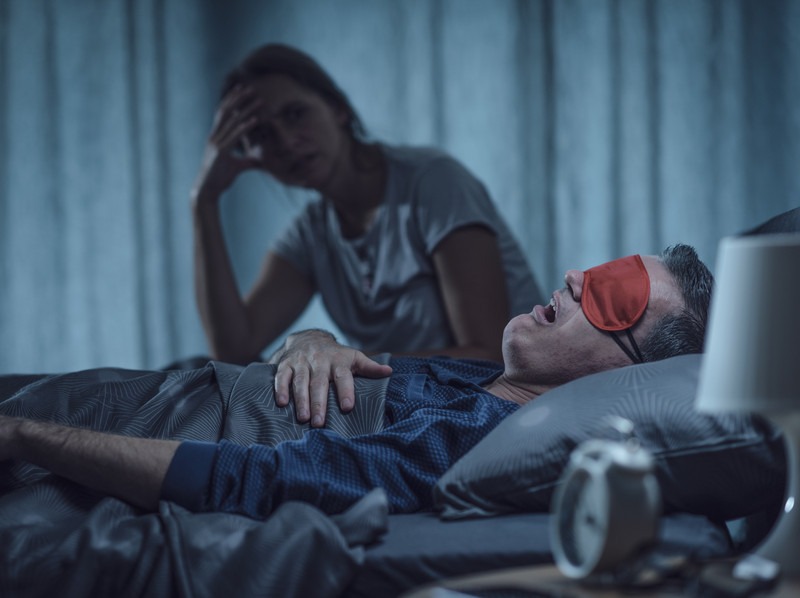
Snoring isn’t always just an annoying noise — sometimes it’s your body telling you something.
Has your partner ever nudged you awake and said, “You’re snoring again!”?
Maybe you’ve been told that your snoring is getting louder. Maybe you wake up with a dry mouth, feel tired even after a full night’s sleep, or find yourself needing coffee just to get through the day.
Or perhaps you feel completely fine and wonder:
Why am I snoring in the first place—and is there actually anything I can do about it?
The good news is that there are solutions for snoring. But before simply trying to stop the noise, it’s important to understand why you’re snoring.
At OC Perfect Smile in Laguna Hills, we look beyond the sound itself and consider what may be happening with your airway while you sleep.
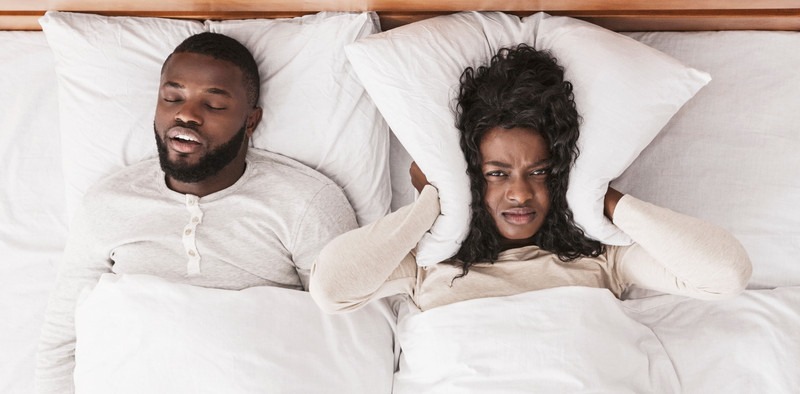
Why Do I Snore?
Snoring happens when air has difficulty moving freely through your airway during sleep. As you fall asleep, the muscles and soft tissues around your throat relax. If the airway becomes narrow enough, those tissues can vibrate as air passes through—and that vibration produces the sound we call snoring.
There isn’t one single cause.
Your anatomy, tongue position, jaw position, nasal congestion, sleeping position, weight, alcohol consumption and other factors can contribute to narrowing of the airway.
For some people, snoring is relatively simple.
For others, however, snoring can be a warning sign of obstructive sleep apnea.
And that’s an important distinction.
Snoring vs. Sleep Apnea: What’s the Difference?
Someone can snore without having sleep apnea.
But loud, chronic snoring—particularly when accompanied by pauses in breathing, choking or gasping during sleep—can be associated with obstructive sleep apnea, or OSA. Local sleep-apnea providers similarly identify loud snoring, breathing pauses and gasping among common warning signs.
With obstructive sleep apnea, the airway repeatedly becomes partially or completely blocked while you’re asleep.
Instead of breathing normally throughout the night, you may experience repeated interruptions in breathing and sleep.
You may not even remember waking up.
Your brain does.
It repeatedly has to bring you out of deeper sleep enough to restore breathing. That’s one reason someone can seemingly sleep for seven or eight hours and still wake up exhausted.
Signs That Your Snoring May Need More Investigation
Talk to a healthcare professional if your snoring is accompanied by symptoms such as:
- Very loud or chronic snoring
- Someone noticing that you stop breathing during sleep
- Waking up choking or gasping
- Morning headaches or dry mouth
- Feeling tired despite getting enough hours of sleep
- Excessive daytime sleepiness
- Difficulty concentrating
- Irritability or changes in mood
You should not assume you have sleep apnea simply because you snore. Likewise, you shouldn’t assume you don’t have sleep apnea simply because you feel healthy.
The appropriate way to determine whether sleep apnea is present is through proper medical evaluation and sleep testing when indicated. Sleep-apnea diagnosis is made by a physician; dentists can screen for signs and provide oral-appliance therapy when appropriate as part of coordinated care.
So, What Can I Do to Stop Snoring?
This is where things become interesting.
Many people think their only choices are to live with snoring or sleep with a CPAP machine.
That’s not necessarily the case.
The appropriate treatment depends on why you’re snoring and whether you have obstructive sleep apnea.
Options may include addressing nasal obstruction, changing sleep position, lifestyle modifications, CPAP therapy when appropriate, and in selected patients, a custom oral appliance.
Can a Dental Appliance Help With Snoring?
For the right patient, it can.
A custom oral appliance is a small device worn in your mouth while you sleep. It may look somewhat like a retainer, but its purpose is very different.
One common type is called a mandibular advancement device.
The appliance gently positions the lower jaw slightly forward. This can help prevent the tongue and soft tissues from collapsing backward and can create more room for air to move through the upper airway.
Oral appliances are already used by dental sleep-medicine practices throughout Laguna Hills and Orange County for appropriate patients with snoring and obstructive sleep apnea.
For many patients, one of the attractions is simplicity.
There’s no mask over your face, no hose, and the appliance is small enough to travel with easily.
However, an oral appliance is not automatically the correct treatment for every person who snores, particularly when significant sleep apnea is present. Proper screening, diagnosis and follow-up matter.
What If I Can’t Tolerate CPAP?
CPAP remains a very important and highly effective treatment for obstructive sleep apnea, particularly in more severe cases.
But some patients struggle to use it consistently because of the mask, airflow, dryness, noise, travel inconvenience or simply difficulty sleeping while wearing it.
For appropriately diagnosed patients—particularly some people with mild to moderate obstructive sleep apnea—a professionally fitted oral appliance may be considered as an alternative or part of their treatment plan. Orange County practices offering dental sleep medicine commonly provide oral-appliance therapy for patients seeking alternatives to CPAP.
The key is not simply choosing the treatment that sounds easiest.
The goal is to find a treatment that is medically appropriate and that you will actually use consistently.
Why Talk to a Dentist About Snoring?
You might be wondering:
“What does my dentist have to do with my snoring?”
Quite a bit.
Dentists routinely evaluate structures that are closely related to the airway, including the teeth, jaws, bite, tongue and oral cavity.
At OC Perfect Smile, Dr. H takes an airway-focused approach to dentistry. If your history or examination raises concern for sleep-disordered breathing, the goal isn’t simply to make you a “snoring mouthguard.”
The first question is:
Why are you snoring?
If sleep apnea is suspected, appropriate medical evaluation or a sleep study may be necessary before deciding on treatment.
Once the diagnosis is understood, we can determine whether a custom oral appliance is an appropriate part of your treatment.
Don’t Buy a Random Snoring Guard Online
This is another important distinction.
A custom oral appliance for snoring or sleep apnea isn’t simply a regular nightguard.
A traditional nightguard is primarily designed to protect teeth from grinding or clenching.
A mandibular advancement appliance is designed and adjusted to influence the position of the jaw and help maintain airway space during sleep.
Because changing jaw position can affect the teeth, muscles, jaw joints and bite, proper fitting and follow-up are important.
Your airway isn’t something we recommend treating by trial and error.
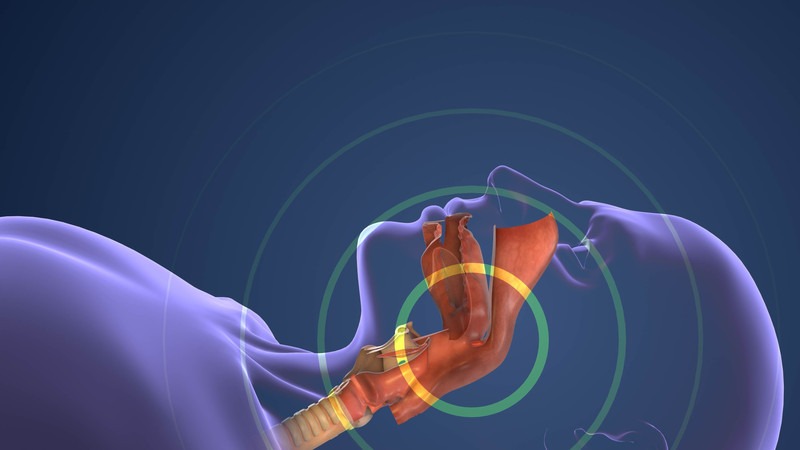
Snoring May Be Affecting More Than Your Partner
It’s easy to joke about snoring.
Couples joke about sleeping in separate rooms. People record their partners snoring. Someone gets elbowed in the middle of the night and rolls onto their side.
But persistent snoring deserves more attention when it may represent sleep-disordered breathing.
So instead of asking only:
“How can I make the snoring quieter?”
A better question may be:
“Why am I snoring, and am I breathing properly while I sleep?”
That is the question we want to help answer.
Snoring Treatment in Laguna Hills & South Orange County
If you live in Laguna Hills, Mission Viejo, Laguna Niguel, Lake Forest, Aliso Viejo, Irvine, or elsewhere in Orange County and you or your partner are concerned about snoring, start with an evaluation.
At OC Perfect Smile in Laguna Hills, conveniently located near the I-5 freeway, Dr. H can evaluate your oral structures, bite and airway-related risk factors and discuss whether further sleep evaluation is appropriate.
For suitable patients, a custom oral appliance for snoring or obstructive sleep apnea may offer a comfortable and convenient treatment option.
The goal isn’t simply a quieter bedroom.
It’s better breathing, better sleep, and better health.
If your partner keeps telling you that you snore—or you’ve noticed daytime tiredness, gasping, choking, or pauses in breathing during sleep—don’t ignore it.
Schedule a consultation with OC Perfect Smile in Laguna Hills and let’s find out what’s really happening while you sleep.