
A root canal can save a tooth that has become infected, inflamed, or damaged inside. During root canal treatment, the infected pulp is removed, the inside of the tooth is cleaned and sealed, and the natural tooth is preserved.
After a root canal, one of the most important questions is how to restore the tooth. Should it receive a crown? Could a veneer be used? Is it safe to leave the tooth without any additional restoration?
The answer depends on whether the tooth is in the front or back of the mouth, how much natural tooth structure remains, whether the tooth is healthy and strong, and how much chewing force it receives.
At OC Perfect Smile, conveniently located in South Orange County near the I-5 freeway, Dr. H and his team evaluate each root canal-treated tooth individually before recommending a crown, veneer, bonding, or no additional restoration. The goal is to protect the tooth while preserving as much healthy natural structure as possible.
Why Does a Root Canal-Treated Tooth Need Restoration?
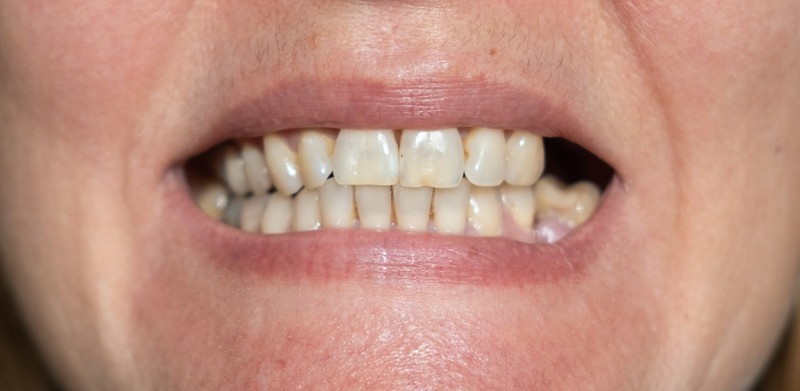
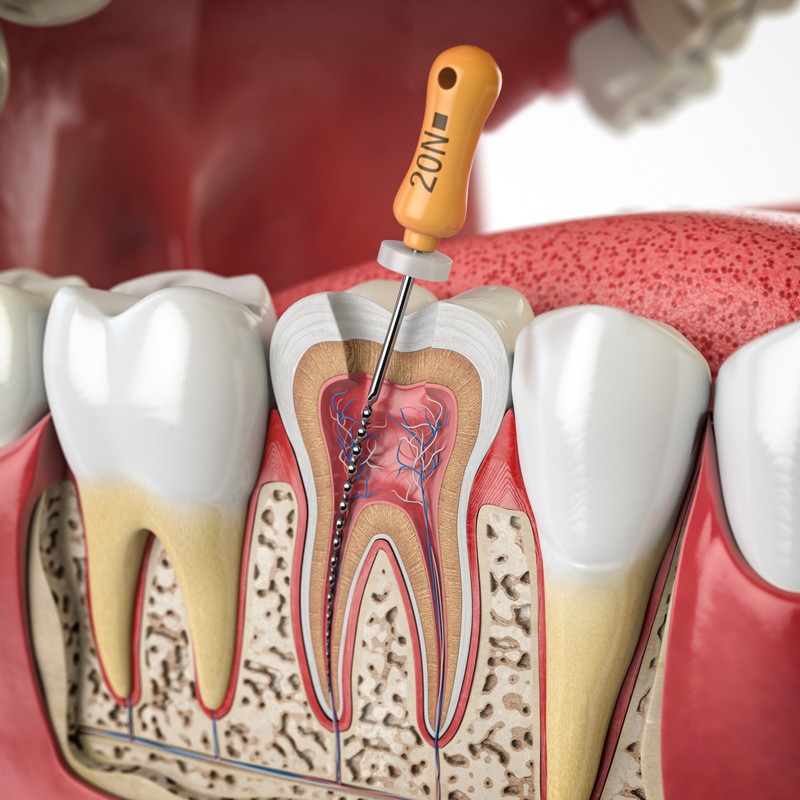
A root canal removes the infected or inflamed pulp from inside the tooth. Although the procedure eliminates infection and preserves the tooth, the tooth may have already lost significant structure because of decay, cracks, large fillings, trauma, or previous dental work.
A root canal-treated tooth is not automatically weak simply because the nerve has been removed. In many cases, the main concern is the amount of tooth structure that was lost before and during treatment.
The restoration placed after a root canal should help:
- Seal the tooth from bacteria
- Restore normal shape and function
- Protect the remaining tooth structure
- Reduce the risk of fracture
- Improve appearance when necessary
- Allow the tooth to function comfortably for many years
Not every root canal-treated tooth requires a crown. However, many teeth—especially back teeth—need substantial protection because they absorb significant chewing forces.
Does Every Root Canal-Treated Tooth Need a Crown?
No. A crown is not automatically required after every root canal.
The decision depends on the tooth’s location, the amount of remaining enamel and dentin, the size of the access opening, the presence of cracks or large fillings, the patient’s bite, and whether the tooth is exposed to heavy chewing forces.
A front tooth with minimal structural damage may sometimes be restored with a conservative filling or veneer. A back tooth with extensive decay or a large filling will usually require a crown or another cuspal-coverage restoration.
The most important question is not simply whether the tooth had a root canal. It is:
How much healthy tooth structure remains, and how much protection does the tooth need?
Root Canal Treatment on Front Teeth
Front teeth, also called anterior teeth, generally experience different forces than molars and premolars. They are primarily used for biting and guiding the jaw rather than grinding food.
Because front teeth usually have less direct chewing pressure, they may not always require a full crown after root canal treatment.
If the front tooth is structurally sound and only a small access opening was needed, a tooth-colored filling may be enough. In other cases, a veneer may be considered to improve appearance and provide additional coverage.
However, a front tooth may still need a crown if it has extensive decay, a large existing filling, a crack, significant loss of tooth structure, discoloration, or a history of trauma.
When Can a Front Tooth Be Restored With a Veneer?
A veneer may be an option for a root canal-treated front tooth when the tooth is otherwise healthy and has enough remaining structure to support the veneer.
A veneer is a thin shell of porcelain or another dental material bonded to the front surface of the tooth. It is primarily designed to improve appearance, but it can also cover and reinforce the visible portion of a tooth in carefully selected situations.
A veneer may be considered when:
- The tooth has adequate remaining enamel
- The tooth is not cracked
- The root canal treatment is healthy and stable
- The tooth has minimal to moderate structural loss
- The bite does not place excessive force on the tooth
- The patient does not have severe teeth grinding
- The tooth’s appearance needs improvement
- The veneer can be bonded securely to healthy tooth structure
The presence of healthy enamel is especially important because veneers rely heavily on bonding to enamel for long-term retention and strength.
A veneer is not simply a smaller crown. It covers only part of the tooth and does not provide the same level of protection as a full-coverage crown.

When Is a Crown Better for a Front Tooth?
A crown may be the better option for a front tooth when the tooth is not in good structural condition.
A front tooth may require a crown if it has:
- Extensive decay
- A large filling
- Significant loss of enamel or dentin
- A crack or fracture
- Weak remaining walls
- Severe discoloration that cannot be treated conservatively
- A history of trauma
- Insufficient enamel for reliable veneer bonding
- A bite that places heavy stress on the tooth
If the tooth is weakened, placing a veneer only on the front surface may not provide enough protection. In that situation, a crown can cover the tooth more completely and help protect it from fracture.
The goal is not to choose a veneer simply because it is more conservative. The restoration must be strong enough for the condition of the tooth.
Can a Root Canal-Treated Front Tooth Be Left Alone?
In some cases, a root canal-treated front tooth may not need a crown or veneer.
If the tooth has minimal structural damage, the access opening is small, the tooth is not cracked, and the appearance is acceptable, a bonded tooth-colored filling may be sufficient.
In rare situations, no additional restoration beyond the root canal filling may be recommended if the tooth is already well sealed and structurally sound. However, leaving a tooth without appropriate restoration can allow bacteria to enter or increase the risk of fracture.
Even when a crown or veneer is not needed, the tooth should be monitored regularly. Changes in color, sensitivity, looseness, swelling, or discomfort should be evaluated promptly.
Root Canal Treatment on Premolars and Molars
Back teeth, including premolars and molars, absorb much greater chewing forces than front teeth. They also have cusps that can flex under pressure, especially when the tooth has lost structure from decay, large fillings, or root canal access.
For this reason, back teeth usually require a crown or another restoration that provides cuspal coverage after root canal treatment.
A crown covers the tooth and helps hold the remaining structure together during chewing. Without adequate protection, a root canal-treated molar or premolar may fracture, sometimes below the gumline. If the fracture extends too far, the tooth may no longer be restorable and may need to be removed.
Why Do Posterior Teeth Usually Need Crowns?
Posterior teeth are exposed to strong vertical and lateral forces. When a tooth has lost a significant amount of structure, the remaining cusps may be more likely to bend or break.
A crown can help:
- Cover and protect weakened cusps
- Restore chewing function
- Seal the tooth from bacterial leakage
- Reduce the risk of fracture
- Rebuild the tooth’s shape and contact with neighboring teeth
- Support long-term function
For a premolar or molar with substantial structural loss, a crown is generally the most predictable restoration.
In some cases, an onlay or other partial-coverage restoration may be considered instead of a full crown. However, the restoration must still protect the cusps and remaining tooth structure.
Can a Posterior Root Canal-Treated Tooth Receive a Veneer?
A traditional veneer is generally not an appropriate restoration for a molar or premolar after root canal treatment.
Veneers cover the front or visible surface of a tooth and are primarily designed for cosmetic improvement. They do not protect the chewing cusps or provide the full coverage that a posterior tooth often needs.
For a back tooth, a veneer would usually not provide adequate protection against chewing forces. If the tooth requires cuspal coverage, a crown, onlay, or another appropriately designed restoration is more suitable.
The exact choice depends on how much tooth structure remains and whether the cusps are intact and strong.
Can a Posterior Tooth Be Left Without a Crown?
Leaving a root canal-treated posterior tooth without a protective restoration may increase the risk of fracture, especially when the tooth has extensive structural damage.
A back tooth may sometimes be temporarily restored with a filling while the patient is waiting for the final restoration. However, the temporary filling is not intended to provide the same long-term protection as a crown or onlay.
In selected cases, a posterior tooth with minimal structural loss may be restored conservatively. This decision requires careful evaluation of the remaining tooth structure, the size of the access opening, the patient’s bite, and the amount of chewing force.
For most molars and many premolars, a crown or cuspal-coverage restoration is recommended after root canal treatment.
What Is the Difference Between a Crown and a Veneer?
A crown covers most or all of the visible portion of a tooth. It is designed to restore both strength and appearance.
A veneer covers only the front surface of a tooth. It is primarily used to improve appearance and is appropriate only when the tooth has enough healthy structure to support it.
Crowns
Crowns may be recommended when:
- The tooth is significantly weakened
- Large portions of the tooth are missing
- The tooth has a crack or fracture
- The tooth needs protection from chewing forces
- The tooth is a premolar or molar
- There is not enough enamel for reliable veneer bonding
- The tooth requires full-coverage protection
Veneers
Veneers may be considered when:
- The tooth is in the front of the mouth
- The tooth is structurally healthy
- Enough enamel remains for bonding
- The tooth has minimal structural damage
- The main concern is appearance
- The bite is favorable
- The patient does not place excessive force on the teeth
A veneer is more conservative than a crown in many situations, but it is not appropriate for every root canal-treated tooth.
What If the Tooth Is Discolored After a Root Canal?
Front teeth can sometimes darken after root canal treatment. This may happen because of changes within the tooth, remaining dental materials, or previous trauma.
If the tooth is structurally healthy, internal whitening, external whitening, bonding, or a veneer may be considered depending on the cause and severity of the discoloration.
If the tooth is also weak or heavily restored, a crown may provide both cosmetic improvement and structural protection.
The restoration should not be selected based on color alone. The health and strength of the tooth must be evaluated first.
What If the Tooth Has a Large Filling?
A large filling can reduce the amount of natural tooth structure available to support a restoration. If a root canal-treated tooth already has a large filling, thin walls, or weakened cusps, a crown may be recommended even if the tooth does not appear severely damaged from the outside.
For a front tooth, a veneer may still be possible if enough healthy enamel remains around the filling and the tooth is not cracked. However, large restorations can reduce the predictability of veneer bonding.
For a back tooth, a large filling combined with root canal treatment commonly indicates the need for a crown or another cuspal-coverage restoration.
What If the Tooth Is Cracked?
A cracked tooth requires special attention.
A veneer may not be appropriate if the crack extends through the tooth or affects the tooth’s ability to withstand chewing forces. A crown may help protect some cracked teeth, but not every crack can be treated successfully.
If a crack extends below the gumline or into the root, the tooth may not be restorable. In that situation, extraction and tooth replacement may need to be discussed.
Root canal treatment can address infection inside a cracked tooth, but it does not eliminate every structural problem. The type, location, and depth of the crack are important when choosing the final restoration.
What Is a Post, and Is It Always Needed?
A post may sometimes be placed inside a root canal-treated tooth to help retain a buildup when there is not enough remaining tooth structure to support a crown.
A post does not strengthen the root. In fact, placing a post requires removing additional tooth structure, so it should be used only when necessary.
Many teeth can be restored without a post if enough natural walls remain. The decision depends on the amount of remaining tooth structure and the type of restoration planned.
A post may be considered for certain front teeth or back teeth with extensive loss of structure, but it is not automatically required after root canal treatment.
What Happens If a Root Canal-Treated Tooth Is Not Restored Properly?
If a tooth is not sealed or protected appropriately, bacteria may re-enter the tooth and cause reinfection. A weakened tooth may also fracture during chewing.
Possible signs of a problem include:
- Pain when biting
- Sensitivity or discomfort
- Swelling near the tooth
- A recurring gum abscess
- A loose filling or crown
- A visible crack
- Changes in tooth color
- A bad taste or drainage
A fractured or reinfected tooth may require retreatment, surgical treatment, or extraction. In some cases, the tooth may no longer be restorable.
This is why the final restoration is an important part of root canal treatment rather than an optional cosmetic step.
How Soon Should a Tooth Be Restored After a Root Canal?
A tooth should generally receive its final restoration as soon as practical after root canal treatment.
A temporary filling can protect the tooth for a limited period, but it is not designed for long-term use. Delaying the final restoration may increase the risk of leakage, decay, or fracture.
The timing depends on the tooth’s condition, whether infection was present, the type of temporary restoration, and the patient’s treatment plan.
Back teeth often need to be restored promptly because they are exposed to heavy chewing forces. Front teeth may allow more flexibility when the tooth is structurally sound, but they still require a reliable seal.
How Does the Bite Affect the Restoration Choice?
The way the teeth come together can significantly affect the success of a crown, veneer, or filling.
Patients who grind or clench their teeth may place excessive force on root canal-treated teeth. A veneer may be less predictable in a patient with heavy grinding, especially if the tooth has limited enamel or a challenging bite.
A crown may provide more protection in some high-force situations, but even crowns can fracture or become damaged if the bite is not managed.
Dr. H may evaluate the bite and discuss a nightguard or other protective measures when appropriate.
Can a Root Canal-Treated Tooth Be Restored With Bonding?
Bonded composite resin may be appropriate for some front teeth with minimal structural loss. It can restore the access opening, improve appearance, and preserve more natural tooth structure.
Bonding is generally less expensive and more conservative than a veneer or crown. However, it may stain, chip, or wear more easily over time.
For a back tooth, bonding alone may not provide enough protection if the tooth has weakened cusps or extensive structural loss.
The best restoration depends on the tooth’s condition rather than choosing the least expensive or least invasive option automatically.
What Is the Most Conservative Restoration?
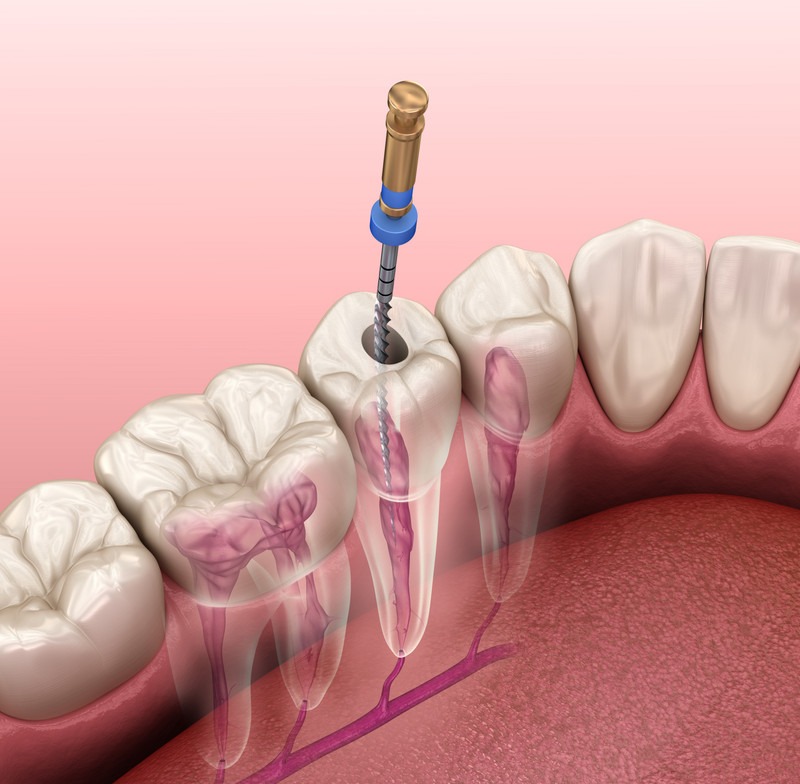
The most conservative restoration is not always the best restoration.
A filling or veneer may preserve more tooth structure than a crown, but if the tooth is weak, the more conservative option may fail and lead to additional damage.
For a healthy front tooth with minimal structural loss, a veneer or bonded filling may be an excellent conservative choice. For a damaged molar, a crown may be the most conservative option in the long term because it protects the tooth from fracture and may help prevent extraction.
The goal is to preserve the tooth while providing the amount of protection it actually needs.
How Does Dr. H Decide Between a Crown, Veneer, or No Restoration?
Before recommending a restoration, Dr. H may evaluate:
- The location of the tooth
- The amount of remaining tooth structure
- The size of the root canal access opening
- The presence of decay or large fillings
- Cracks or fractures
- The amount of healthy enamel
- The condition of the root canal treatment
- The patient’s bite
- Signs of grinding or clenching
- The tooth’s appearance
- Gum health
- The patient’s ability to maintain the restoration
Dental imaging may be used to evaluate the roots, surrounding bone, and remaining tooth structure. In some cases, photographs, digital scans, or other diagnostic tools can help plan the final restoration.
Root Canal Restoration at OC Perfect Smile
A root canal is designed to save a natural tooth, but the treatment is not complete until the tooth is properly restored.
For a healthy front tooth with minimal structural damage, a bonded filling or veneer may be possible. A veneer can be considered when the tooth has enough healthy enamel, no significant cracks, and a favorable bite.
For a front tooth that is weak, heavily restored, cracked, or missing substantial structure, a crown may provide better protection.
For premolars and molars, a crown or another cuspal-coverage restoration is commonly recommended because posterior teeth absorb significant chewing forces. A veneer is generally not an appropriate substitute for a crown on a back tooth.
In selected cases, a tooth may not need a crown or veneer if it remains structurally sound and well sealed. However, this decision should be made only after a careful examination.
At OC Perfect Smile, conveniently located in South Orange County near the I-5 freeway, Dr. H and his team can evaluate your root canal-treated tooth and explain whether a crown, veneer, bonded filling, onlay, or monitoring is most appropriate.
Our office uses modern diagnostic technology and digital treatment planning to evaluate tooth structure, bite relationships, and the surrounding tissues.
OC Perfect Smile is conveniently located in South Orange County near the I-5 freeway, making our office accessible to patients throughout Laguna Hills and surrounding Orange County communities.
If you have recently had a root canal or have a tooth that still needs its final restoration, schedule a consultation to learn how to protect the tooth and preserve your natural smile.