
Do You Really Need Teeth Pulled for Braces? A Non-Extraction, Airway-Focused Approach in Laguna Hills
You’ve finally decided to straighten your teeth—or perhaps you’ve taken your child for an orthodontic consultation. You expect to hear about braces, treatment time, and how the smile will look.
Then you hear something you weren’t expecting: “We need to remove some healthy permanent teeth to make room.”
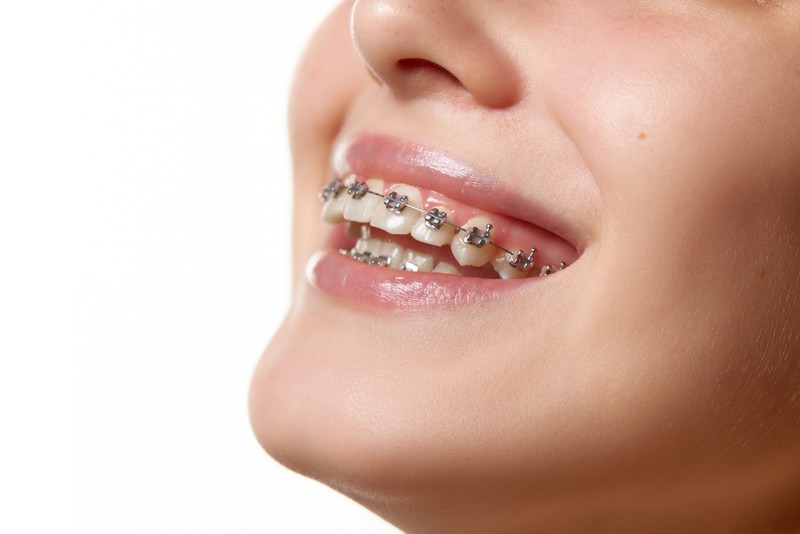
For many patients and parents, that immediately raises an important question:
Do we really have to extract healthy teeth to straighten the smile?
At OC Perfect Smile in Laguna Hills, Dr. H believes that question deserves serious consideration before any healthy permanent teeth are removed.
Whenever clinically appropriate, his philosophy is simple: preserve healthy teeth, develop adequate space, correct the bite, and consider the patient’s jaw development and airway—not just how straight the front teeth look.
That philosophy is one reason Dr. H offers FASTBRACES®, an orthodontic system that can provide a non-extraction treatment option for many appropriately selected patients.
And while the “FAST” part gets plenty of attention, speed isn’t necessarily the most exciting part.
For Dr. H, one of the biggest advantages is the possibility of achieving a beautiful smile and functional bite without automatically sacrificing healthy permanent teeth.
What Is Non-Extraction Orthodontics?
Non-extraction orthodontics means correcting tooth alignment and the bite without removing healthy permanent teeth solely to create space.
When teeth are crowded, the obvious assumption is that there are “too many teeth.”
But sometimes a better question is:
Why isn’t there enough room for the teeth we naturally have?
Crowding can be related to the relationship between tooth size and available arch space. In some patients—particularly growing children—narrow dental arches or jaw-development patterns may also be part of the picture.
Traditionally, extraction of permanent teeth, frequently premolars, has been one way to create orthodontic space.
But it isn’t the only possible approach.
Depending on the patient’s age, anatomy, facial profile, amount of crowding, bite, periodontal health, root positions, and other factors, orthodontic treatment may be possible without removing healthy permanent teeth.
That is why diagnosis matters so much.
“My Orthodontist Says I Need Four Teeth Extracted. Do I Have Another Option?”
This is a common concern for parents and adults seeking orthodontic treatment.
And the answer is:
Possibly.
A recommendation for extraction does not necessarily mean that another treatment approach isn’t possible.
At the same time, no responsible dentist should promise that every orthodontic case can or should be treated without extractions. There are situations in which removing teeth may be the safest or most predictable treatment.
But extracting a healthy permanent tooth is irreversible.
Once it’s gone, it’s gone.
That is why Dr. H believes patients should understand whether a reasonable non-extraction orthodontic alternative exists before proceeding.
If you or your child has been told that two or four healthy permanent teeth need to be removed for braces, a second opinion may be worthwhile before making that permanent decision.
What Makes FASTBRACES® Different?
Despite the name, FASTBRACES® isn’t simply about trying to move teeth as quickly as possible.
The system uses a patented bracket and wire design and a treatment philosophy involving tooth movement and remodeling of the supporting alveolar bone.
FASTBRACES® has been used in non-extraction orthodontic cases, including patients with significant crowding. Treatment can also be considerably shorter for some appropriately selected patients compared with traditional orthodontic timelines.
However, Dr. H doesn’t choose FASTBRACES® simply because it may be faster.
The goal is not “straight teeth at any cost.”
The goal is to achieve attractive alignment and a healthy relationship between the upper and lower teeth while preserving natural teeth whenever clinically appropriate.
Straight Teeth Are Only Half the Story
When most people think about orthodontics, they think about the front teeth:
- Are they straight?
- Does the smile look good?
But Dr. H looks beyond the six teeth you see in a photograph.
Your upper and lower teeth function together as a system. How they meet—known as the bite or occlusion—is extremely important.
Orthodontic planning should therefore consider questions such as:
- How do the upper and lower teeth fit together?
- Is there an overbite, underbite, open bite, or crossbite?
- Is the dental arch narrow?
- Is there adequate room for the tongue?
- Where are the roots positioned?
- How much supporting bone is available?
- What is the patient’s facial profile?
- Is the patient still growing?
- Are there signs of mouth breathing, snoring, or sleep-disordered breathing?
For Dr. H, orthodontics isn’t simply about lining up teeth.
It is about alignment, bite, function, development, and long-term health.
Why Are the Teeth Crowded in the First Place?
This may be one of the most overlooked questions in orthodontics.
Imagine a child with significant crowding and a narrow upper arch.
One approach might be to remove teeth and use the newly created space to align the remaining teeth.
But another possibility in an appropriately selected growing patient may be to ask:
Can we develop or expand the arch and create the necessary space instead?
That distinction matters.
Rather than simply treating the crowding, Dr. H wants to understand why the crowding exists.
For some growing patients, orthodontic or orthopedic expansion may help create additional space and improve the relationship of the dental arches.
And this leads to another important consideration that goes far beyond having straight teeth:
What About Breathing, Sleep, and the Airway?
Your teeth don’t exist independently from the rest of your face.
Your jaws, dental arches, tongue, nasal passages, muscles, and airway are closely related anatomically.
This is especially important when evaluating a growing child.
Children with narrow arches or certain craniofacial growth patterns may also present with symptoms such as mouth breathing, snoring, restless sleep, teeth grinding, or other signs that deserve evaluation for sleep-disordered breathing and obstructive sleep apnea (OSA).
This does not mean that crowded teeth cause sleep apnea.
It also does not mean that orthodontic extractions automatically cause obstructive sleep apnea.
OSA is a complex medical condition with multiple possible contributing factors, and patients with suspected sleep apnea should receive appropriate medical evaluation.
But it does mean something very important:
The airway deserves consideration when planning orthodontic treatment.
Creating Space vs. Simply Removing Teeth
Removing permanent teeth can create orthodontic space.
But if a patient also has narrow dental arches or deficient jaw development, removing teeth does not by itself address those underlying anatomical concerns.
For appropriately selected patients—particularly children who are still growing—orthodontic or orthopedic expansion may be considered as part of treatment.
Expansion can create additional dental-arch space and, depending on the type of expansion and the individual patient, may also increase certain nasal and oral airway dimensions.
That doesn’t mean expansion is a guaranteed treatment or cure for sleep apnea.
But if a child has a narrow upper jaw, crowding, mouth breathing, snoring, or sleep problems, Dr. H believes it makes sense to evaluate the entire picture before permanently removing healthy teeth.
Don’t Forget About the Tongue
There is another important structure inside the dental arches:
Your tongue.
The tongue needs adequate functional space.
When evaluating a patient with severe crowding and narrow arches, Dr. H considers the relationship between the teeth, jaws, tongue, facial development, and airway rather than looking at crooked teeth in isolation.
This becomes particularly important in children because their faces and jaws are still developing.
When clinically appropriate, creating or preserving adequate arch dimensions may provide space for the teeth while also supporting normal oral function.
That is a very different philosophy from simply asking:
“Which teeth can we remove to make everything fit?”
Watch for These Signs in Your Child
If your child needs orthodontic treatment, tell Dr. H if you have noticed:
- Regular snoring
- Mouth breathing during the day or night
- Sleeping with the mouth open
- Restless or disrupted sleep
- Teeth grinding or clenching during sleep
- Frequent waking
- Difficulty waking in the morning
- Daytime sleepiness
- Behavioral or concentration difficulties
- Significant dental crowding
- A noticeably narrow dental arch
None of these symptoms alone proves that your child has obstructive sleep apnea.
However, they can be clues that breathing and sleep deserve further investigation rather than looking at the teeth alone.
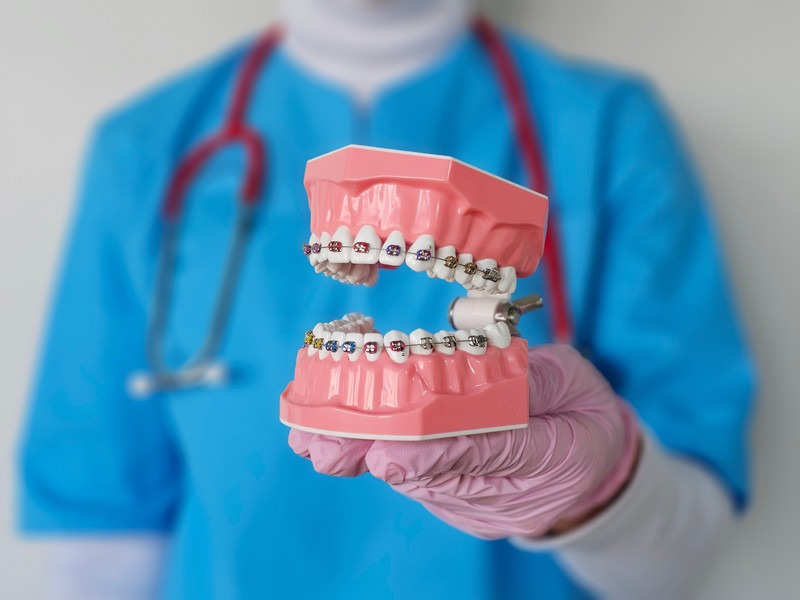
Can Crowded Teeth Be Straightened Without Extraction?
Many times they can, but not always.
Mild and moderate crowding—and even some more significant cases—may have non-extraction treatment possibilities depending on the patient’s anatomy and diagnosis.
FASTBRACES® has been used to treat non-extraction cases, including patients with substantial crowding.
But two people who appear to have almost identical crooked teeth can have completely different underlying anatomy.
One may be an excellent candidate for non-extraction treatment.
The other may not be.
That’s why an examination and appropriate diagnostic records are essential before making a recommendation.
Can an Overbite Be Corrected Without Removing Teeth?
In some patients, yes.
Having an overbite doesn’t automatically mean teeth must be extracted.
The important question is what is causing the bite problem.
Is it primarily the position of the teeth?
Is it related to jaw position or development?
Is there significant crowding?
What does the patient’s facial profile look like?
How much space and supporting bone are available?
Dr. H evaluates these relationships before deciding whether a non-extraction approach is appropriate.
The same principle applies to other bite problems, including certain crossbites, open bites, and underbites.
Why Preserve Healthy Permanent Teeth?
Natural teeth are valuable.
If a healthy permanent tooth can remain in the mouth while still achieving a stable, attractive, and functional result, preserving it is worth considering.
That is why Dr. H doesn’t automatically begin treatment planning with:
“Which teeth should we remove?”
He prefers to begin with:
“Can we create the necessary space, alignment, and bite while preserving these healthy teeth?”
Sometimes the answer is yes.
Sometimes extraction may still be necessary.
The important difference is that the decision is made after considering the alternatives.
What If Another Dentist or Orthodontist Already Recommended Extractions?
Getting a second opinion doesn’t mean the first dentist was wrong.
Orthodontics can be complex, and clinicians may use different treatment philosophies, appliances, and techniques.
But if healthy permanent teeth haven’t been removed yet, there is still time to ask:
“Is there a predictable way to treat my case without extracting these teeth?”
That is a reasonable question.
And because extraction is irreversible, it is worth asking before, not afterward.
Is FASTBRACES® Really Faster?
It can be.
FASTBRACES® reports that some appropriately selected cases may be treated in approximately 60–100 days, while more complicated cases can take longer.
But every patient is different.
Treatment time depends on the bite, severity of crowding, biology of tooth movement, patient cooperation, treatment goals, and many other factors.
Dr. H doesn’t believe patients should select orthodontic treatment based solely on a promise about the number of days or months.
The “fast” can be a wonderful advantage.
But the bigger question is:
What will the final result look like, how will the teeth fit together, and can we achieve it while preserving healthy teeth whenever possible?
FASTBRACES® for Adults Who Want to Avoid Extractions
Adults sometimes believe it’s too late to consider non-extraction orthodontics because their jaws have finished growing.
That’s not necessarily true.
Many adults can still be evaluated for braces without extractions, although adult treatment planning is different from treatment of a growing child.
FASTBRACES® may be an option for appropriately selected adults who have avoided orthodontic treatment because they were concerned about having healthy teeth removed or spending years in braces.
The first step isn’t committing to treatment.
It’s simply finding out what options you have.
FASTBRACES® and Non-Extraction Orthodontics for Children
For parents, being told that healthy permanent teeth should be removed from their child can understandably be concerning.
Children also present a unique opportunity because growth and development may still be occurring.
Depending on the child’s age and diagnosis, Dr. H may evaluate whether expansion or another developmental approach could help create space and improve the dental-arch relationship rather than immediately relying on extraction.
This is also an opportunity to look for symptoms involving breathing and sleep.
If your child has crowded teeth and snores or consistently breathes through the mouth, make sure you mention it during the consultation.
Those pieces of information may be more connected than they initially appear.

“Do I Need Teeth Extracted Before Braces?”
There is no answer that applies to everyone.
Instead, ask:
- Why are extractions being recommended in my case?
- Is there a reasonable non-extraction alternative?
- Could expansion create the necessary space?
- How will each treatment option affect my bite and facial profile?
- If my child has a narrow jaw, mouth breathing, or snoring, should airway and jaw development also be evaluated?
These are valuable questions to ask before healthy permanent teeth are removed.
A Different Philosophy: Develop When Appropriate, Extract When Necessary
Dr. H’s philosophy at OC Perfect Smile in Laguna Hills is not that permanent teeth should never be extracted.
There are situations where extraction orthodontics is absolutely appropriate.
Instead, the philosophy is:
- Preserve healthy teeth whenever clinically appropriate.
- Create space rather than simply remove teeth when a predictable alternative exists.
- Correct the bite—not just the appearance of the front teeth.
- Consider jaw development, tongue space, breathing, and sleep as part of the bigger picture.
And most importantly:
- Treat the patient, not just the crooked teeth.
- Looking for Braces Without Extractions in Laguna Hills?
Maybe you found this page because you’ve been searching for:
“braces without extractions near me”
“non-extraction orthodontics Laguna Hills”
“can crowded teeth be fixed without extraction?”
“do I need four teeth removed for braces?”
“alternative to tooth extraction for braces”
“Fastbraces near me”
“overbite correction without extraction”
“how to avoid tooth extraction for braces”
“jaw expansion instead of tooth extraction”
or
“can expanding the jaw help crowded teeth?”
If so, you’re probably not simply looking for straight teeth.
You’re looking for another option before making an irreversible decision.
At OC Perfect Smile in Laguna Hills, Dr. H evaluates the complete picture: tooth alignment, bite, available space, dental arches, jaw development, facial relationships, tongue space, and—when indicated—possible airway and sleep concerns.
FASTBRACES® and other non-extraction strategies may provide an alternative for appropriately selected children, teenagers, and adults.
Before You Remove Healthy Teeth, Find Out If You Have Another Option
If you or your child has been told that healthy permanent teeth need to be extracted before braces, consider getting a second opinion before the teeth are removed.
Once a permanent tooth is extracted, the decision cannot be reversed.
There may be a different way to approach the problem.
For some patients, FASTBRACES® may allow alignment and bite correction without extraction. For growing patients with narrow arches, expansion may also be part of the conversation. And for patients with mouth breathing, snoring, or poor sleep, the airway may deserve further evaluation as well.
A consultation with Dr. H at OC Perfect Smile in Laguna Hills can help determine which approach is appropriate for you or your child.
Because successful orthodontics shouldn’t be measured only by how straight the teeth look.
The goal is a beautiful smile, a functional bite, healthy natural teeth, adequate space for the tongue, proper development when possible—and a treatment plan that considers the person behind the smile.