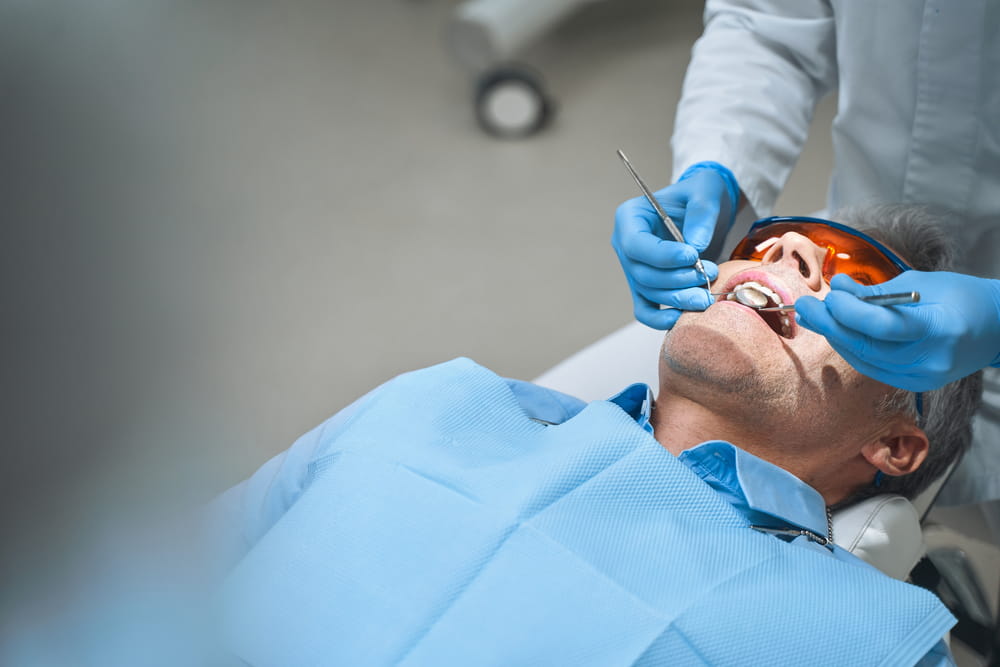
One of the most common questions patients ask after completing a root canal is, “Do I really need a crown?”
The short answer is that many teeth do require a dental crown after root canal treatment, but not every tooth does. The decision depends on the location of the tooth, how much healthy tooth structure remains, and the amount of pressure that tooth experiences during everyday chewing.
At OC Perfect Smile, conveniently located in South Orange County near Interstate 5, Dr. H and his team carefully evaluate each case individually. Our goal is to preserve your natural teeth whenever possible while helping you avoid future complications and costly dental problems.
What Is a Root Canal?
Root canal treatment is a procedure used to save a tooth that has become infected, severely decayed, or damaged. During treatment, the infected or inflamed pulp inside the tooth is removed. The root canals are then cleaned, disinfected, and sealed to help prevent future infection.
Many patients searching for terms like “root canal treatment,” “root canal near me,” “best dentist for root canal,” or “do I need a crown after a root canal” are surprised to learn that a root canal does not strengthen the tooth. In fact, once treatment is completed, the tooth can become more susceptible to fractures if it is not properly restored.
Why Are Crowns Recommended After Root Canal Treatment?
A dental crown is a custom-made restoration that completely covers and protects the remaining tooth structure. It helps restore the tooth’s strength, function, and appearance.
After a root canal, several factors can increase the risk of the tooth cracking or breaking:
- The tooth may already have extensive decay.
- Large fillings can weaken the remaining tooth structure.
- The access opening created during treatment removes additional tooth material.
- The tooth has lost some of its natural internal support.
A crown helps distribute biting forces more evenly and provides protection against fractures during normal chewing and function.
Why Posterior Teeth Usually Need Crowns
Posterior teeth include the premolars and molars located in the back of the mouth. These teeth absorb the majority of chewing forces every day.
Your molars endure significant pressure from chewing, grinding, and biting. When a molar has undergone root canal treatment, the remaining tooth structure is often compromised. Without the protection of a crown, the risk of fracture increases considerably.
This is why dentists frequently recommend crowns for root canal-treated molars and premolars. Patients often search for phrases such as “root canal crown cost,” “crown after root canal molar,” or “how long can I wait for a crown after a root canal.” In many cases, delaying treatment can increase the likelihood of the tooth breaking beyond repair.
If a root canal-treated molar fractures deeply below the gum line, extraction may become the only remaining option.
Can Front Teeth Avoid Crowns?
In some cases, yes.
Anterior teeth, including incisors and canines, are exposed to significantly less chewing pressure than back teeth. If a front tooth has minimal decay, limited structural damage, and enough healthy enamel remaining, it may be restored successfully with a tooth-colored filling instead of a crown.
However, not every front tooth is a candidate for this approach.
A crown may still be recommended if:
- The tooth previously had a large filling.
- Significant tooth structure was lost due to trauma or decay.
- The tooth has become discolored following root canal treatment.
- Visible cracks are present.
- The patient has habits such as grinding or clenching their teeth.
Every situation is unique and should be evaluated by an experienced dentist.
What Happens If You Don’t Get a Crown?
One of the most common questions patients ask is, “What happens if I don’t get a crown after a root canal?”
The answer depends on the tooth and the amount of remaining structure, but potential risks may include:
- Cracked tooth syndrome
- Complete tooth fracture
- Pain while chewing
- Recurrent decay
- Leakage of bacteria into the root canal system
- Tooth loss requiring extraction
- More extensive and expensive treatment in the future
Although some patients delay getting a crown because they are not experiencing discomfort, waiting too long can significantly increase the risk of losing the tooth altogether.
How Soon Should You Get a Crown After a Root Canal?
Ideally, the final restoration should be completed as soon as reasonably possible after root canal treatment.
Temporary fillings are not designed for long-term protection. The longer a tooth remains unprotected, the greater the risk of fracture, leakage, or reinfection.
Patients frequently ask, “How long can I wait to get a crown after a root canal?” While every case is different, completing the final restoration promptly is generally recommended to maximize the long-term success of treatment.
Are There Alternatives to Crowns?
In selected cases, particularly for some front teeth, alternatives may include:
- Composite (tooth-colored) fillings
- Dental bonding
- Onlays or partial-coverage restorations
However, these options are not appropriate for every situation. The best restoration depends on the amount of remaining tooth structure and the need to maintain both strength and appearance.
How Long Do Root Canal-Treated Teeth Last?
A properly treated and restored tooth can last for many years and often for decades.
Long-term success depends on several factors, including:
- The quality of the root canal treatment
- Timely placement of the final restoration
- Consistent oral hygiene habits
- Regular dental checkups and cleanings
- Avoiding excessive grinding and clenching
Research has shown that teeth restored appropriately after root canal therapy generally have a much better long-term prognosis.
Protecting Your Investment in Your Smile
A root canal is designed to save your natural tooth. Protecting that investment with the right restoration can help you avoid future discomfort, unexpected dental emergencies, and more extensive treatment.
At OC Perfect Smile, conveniently located in South Orange County near Interstate 5, Dr. H carefully evaluates every root canal-treated tooth to determine the most conservative and predictable treatment option. While many posterior teeth benefit significantly from a dental crown, some front teeth can be successfully restored without one.
If you have recently had a root canal or have been told you may need one, understanding your options can help you make informed decisions about your oral health. Our team is committed to helping patients preserve their natural teeth through personalized care, advanced technology, and treatment recommendations tailored to their individual needs.
If you have questions about whether you need a crown after root canal treatment, schedule a consultation with OC Perfect Smile to discuss the best approach for protecting your smile for years to come.